Ruston natives are aware of the blind community within the small town, thanks to the Louisiana Center for the Blind located in the heart of its historic downtown. What many do not realize is that just down the road, there’s an institute in Louisiana Tech University’s College of Education and Human Sciences that is transforming the future of blind education.
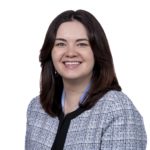
The Professional Development and Research Institute on Blindness (PDRIB) prepares students to educate and rehabilitate individuals who are blind or visually impaired. Dr. Casey Robertson’s research is at the forefront of improving educational outcomes for blind students.
“As the lead instructor for all Teachers of Blind Students courses, I am often known as the ‘braille teacher,’” Robertson said. “My work encompasses a wide range of roles, all centered on advancing braille literacy and improving educational outcomes for blind students.”
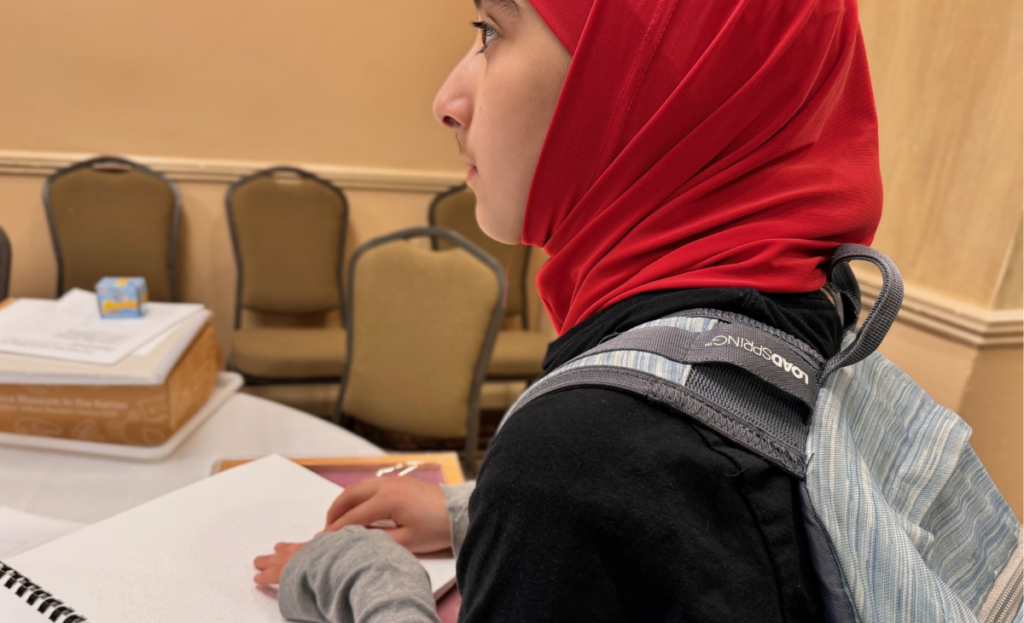
Her work, which includes teaching, training, advocating, and developing innovative curriculums, was recently recognized on a national level. In July 2025, Robertson received the Dr. Jacob Bolotin Award from the National Federation of the Blind, one of the highest honors in the field. The award, which includes a $20,000 prize, recognized individuals and organizations who break down barriers facing blind individuals, challenge negative perceptions, and inspire new opportunities.
For Robertson, the recognition carries both professional and deeply personal meaning which affirms the mission in which she’s dedicated her life.
“Receiving the Dr. Jacob Bolotin Award has been one of the defining moments of my professional career,” she said. “The Blind Doctor, a biography of Dr. Jacob Bolotin, was among the first books I read when I entered the field of education for blind students. His story gave me hope that blind individuals can achieve and become anything they aspire to with the right advocacy and opportunities.”
Through her work with PDRIB, Robertson prepares future teachers, trains parents to read braille alongside their children, and develops paraprofessionals who can support braille instruction in schools. She also advocates in legal settings, serving as an expert witness in Individualized Education Program (IEP) cases to ensure blind students receive the services they need.
Over the past decade, she has been developing a curriculum that applies the Science of Reading to braille instruction, with plans to publish the work in book form. Her graduates consistently achieve the highest pass rate in the nation on the National Certification in Unified Braille Exam.
Her approach has left such a lasting impact on those she teaches.
“Casey’s approach to teaching braille has revolutionized how I teach my own students,” Scott Weisner, one of Robertson’s former students, said. “After 28 years, I finally have a braille teaching method that isn’t a cumbersome, painful task. My students are devouring the lessons and asking for more.”
But the work is not without its challenges. Only 10 percent of blind individuals read braille or have access to employment. Many blind students are introduced to braille too late, or rely on inefficient visual reading strategies due to misconceptions that braille is inferior to print. This sobering statistic drives much of her mission.
“My work, alongside the mission of PDRIB, is dedicated to changing this narrative,” she said. “We ensure that teachers leave our program with the skills, confidence, and self-efficacy to teach braille effectively. Through our Natural Order of Contractions method, students can develop braille literacy alongside their sighted peers, eliminating delays that have historically hindered academic success.”
This is not the first time PDRIB has been recognized with a Bolotin Award. In 2011, the institute received the honor for its groundbreaking research in blindness education. Robertson says this year’s award builds on that legacy.
“While the earlier recognition was rooted primarily in research, this award reflects the application of that research in direct, practical ways,” she said. “It recognizes the impact of training, teaching, motivation, and leading people toward better opportunities and outcomes.”
For Robertson, the acknowledgement is not hers alone. She credits her colleagues and mentors, including Dr. Edward Bell and Dr. Ruby Ryles, as well as the countless blind friends and students who have shaped her understanding of what it means to thrive without sight.
Robertson’s work has no end in sight. She is preparing to publish her curriculum, pursue formal research into the literacy of blind students, and continue her lifelong mission of training teachers, parents, and paraprofessionals.
PDRIB is a small team of educators, but we’ve produced some of the most literacy-changing research in the field of blindness. We will continue to strive for the day that great literacy for blind students is the norm, not the exception.
– Dr. Casey Robertson