Louisiana Tech team utilizing AI to predict the future of bacteria behavior
As artificial intelligence (AI) continues to drive innovation, Louisiana Tech University remains at the forefront of integrating these groundbreaking tools with biomedical research. Using data and computation to better understand what biology is doing now and what it may do in the future, Dr. Mark DeCoster, professor of Biomedical Engineering, and his team are leading the charge in Louisiana Tech’s efforts in biomedical excellence.
Louisiana Tech and Radiance Technologies, an employee-owned leader in defense and intelligence solutions, continue to work hand-in-hand on a variety of initiatives. One in particular is pushing scientific boundaries and turning North Louisiana into a biotechnology powerhouse.
The U.S. Defense Advanced Research Projects Agency’s Biological Technologies Office is investing up to $5.85 million over 18 months to collaborate with LSU Health Shreveport and Radiance to develop cutting-edge whole-cell modeling tools that could transform the future of microbial research.
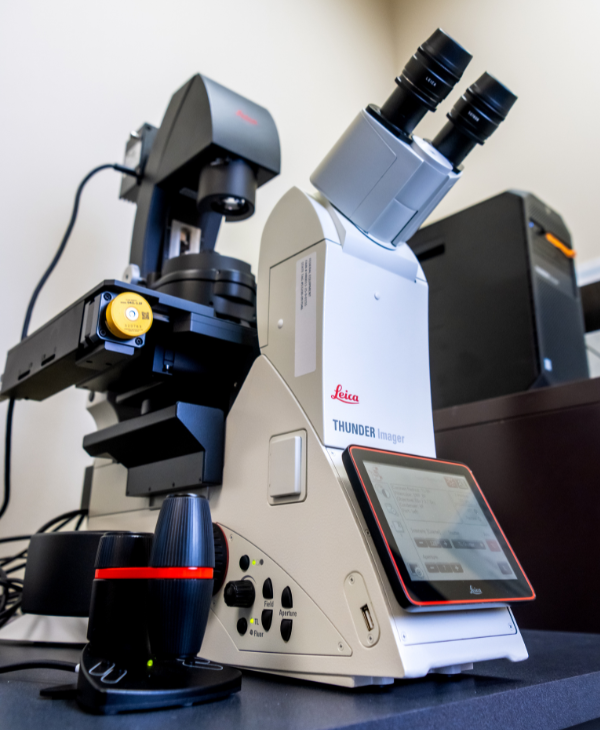
The project, “Crowded, Heterogeneous, Intracellular, and Multi-Scale Environments for Revolutionary Bio-Applications (CHIMERA),” will develop a simulation capable of predicting bacterial behavior under various conditions. The team, known as DeCoster’s Lab Rats, aims to better understand what bacteria is doing in the present, and what it will do in the future. This technology spans national security, healthcare, and biotechnology, from combating antibiotic resistance to improving bio-manufacturing processes.
For DeCoster, CHIMERA represents a new way of approaching biological research. “The humans provide the knowledge of what is actually happening,” he said. “The computers provide the knowledge of what could happen. With this project, we are attempting to do both.”
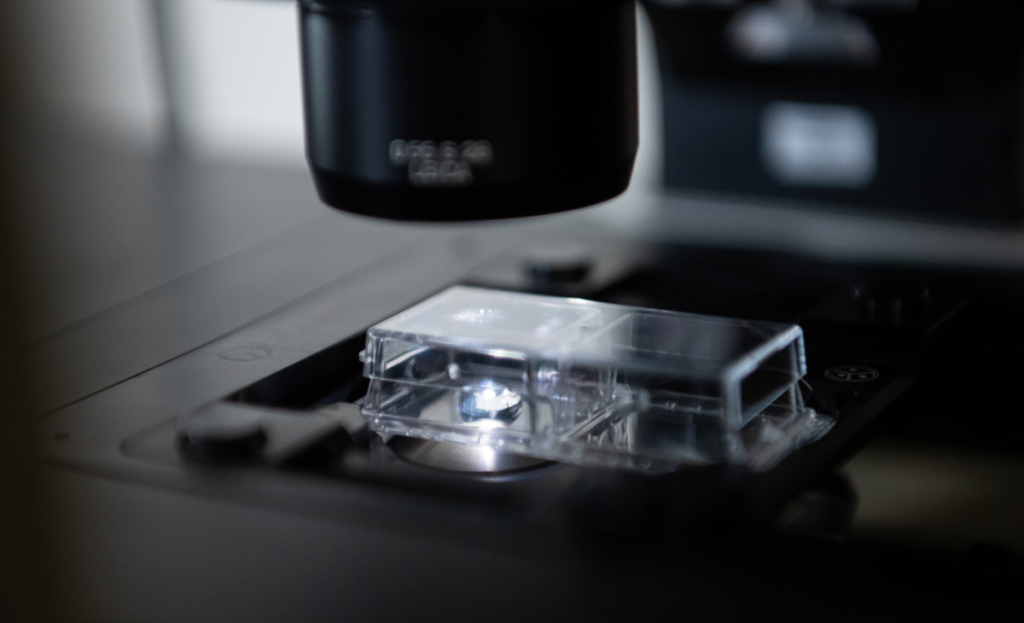
Louisiana Tech plays a central role in the collaboration, generating experimental data and leading the simulation and modeling efforts that drive the project forward. Experimental data collected through microscopy and laboratory observation serve as the “ground truth,” informing simulations that can predict microbial behavior under changing conditions.
DeCoster noted that collaboration with existing powerful tools of computation, data flow, and simulation and modeling need a more balanced approach when working together with “ground truth” data.
“As we see the incredible growth and capabilities of AI in our daily lives, this is also impacting research in the lab,” he added. “AI and associated tools can help us with prediction, but we need to be careful caretakers of the information it is using for those predictions. This research project values and attempts to integrate the real-world data with powerful tools for predicting what microbes such as bacteria might do in the future.”
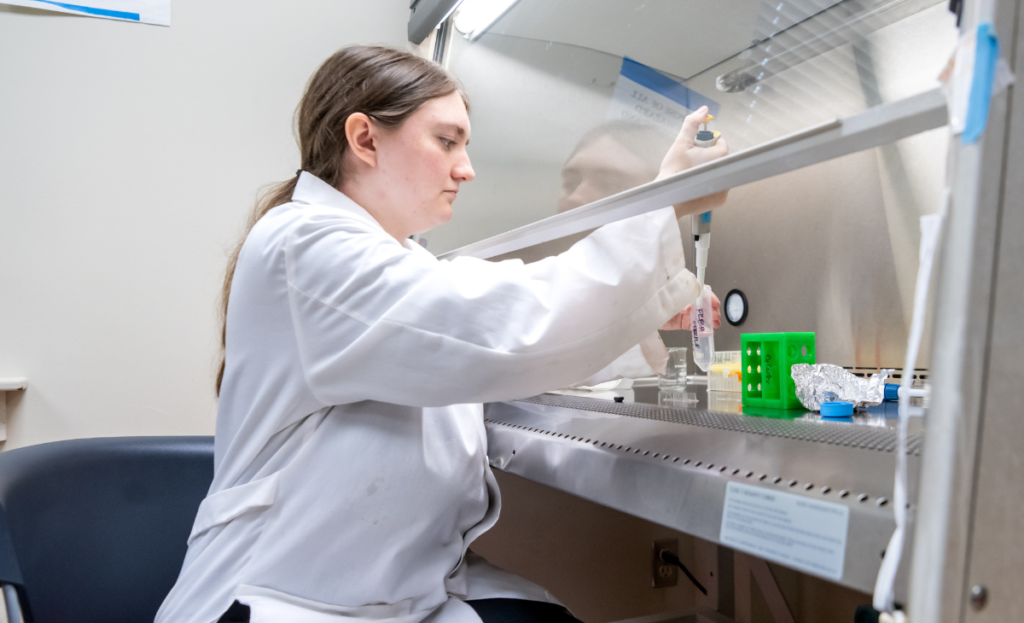
Realizing the research aligned with her academic goals, Molecular Sciences and Nanotechnology (MSNT) doctoral student Jenna Etheridge joined the project after taking a nanotechnology course with DeCoster.
“For North Louisiana, these types of studies can lead to more research-focused chemical and biological jobs that are not as plentiful here compared to other regions of the United States,” she said.
Her work focuses on microscopy and visualization of bacteria, then collecting the data and reporting it to DeCoster.
Being on this project has opened my eyes to the multiple possibilities that research can enable. It made me realize that these jobs are possible anywhere with the right support.”
– JENNA ETHERIDGE
Etheridge and the rest of the Lab Rats use hands-on research, collaborating with each other to provide information to Radiance and LSU Health Shreveport. Among the different teams, they discuss where the research will go to achieve the greatest results.
For DeCoster, one of the most rewarding aspects of CHIMERA has been watching his students learn from colleagues across institutions. The collaboration is already strengthening research infrastructure and expanding intellectual capabilities.
“While I with my individual research group contribute to the project, I find it rewarding to be learning from others on the team, such as other colleagues at Tech, and the collaborators from Radiance and LSU Health Shreveport,” DeCoster said.
It is gratifying to be part of a team that is training students, technicians, and research fellows for the future.”
– MARK DECOSTER
As CHIMERA moves forward, it signals more than a scientific breakthrough. It reflects a growing research momentum at Louisiana Tech and a shift in how and where cutting-edge biotechnology research can happen.