Women Redefining Ag Education
As Kylee Triche guided students to their respective contest rooms for the Louisiana FFA Area I Leadership Development Events, she paused to give one nervous student a pep talk before delivering her speech about the Gulf Coast. A sense of calm settled on the student’s face, and in that brief moment, the influence of women in agricultural education was clear.
Moments like this are not uncommon in agricultural education classrooms. Isabella LeBlanc, student teacher at Ruston High School, credits her own ag teacher with helping her find her voice.
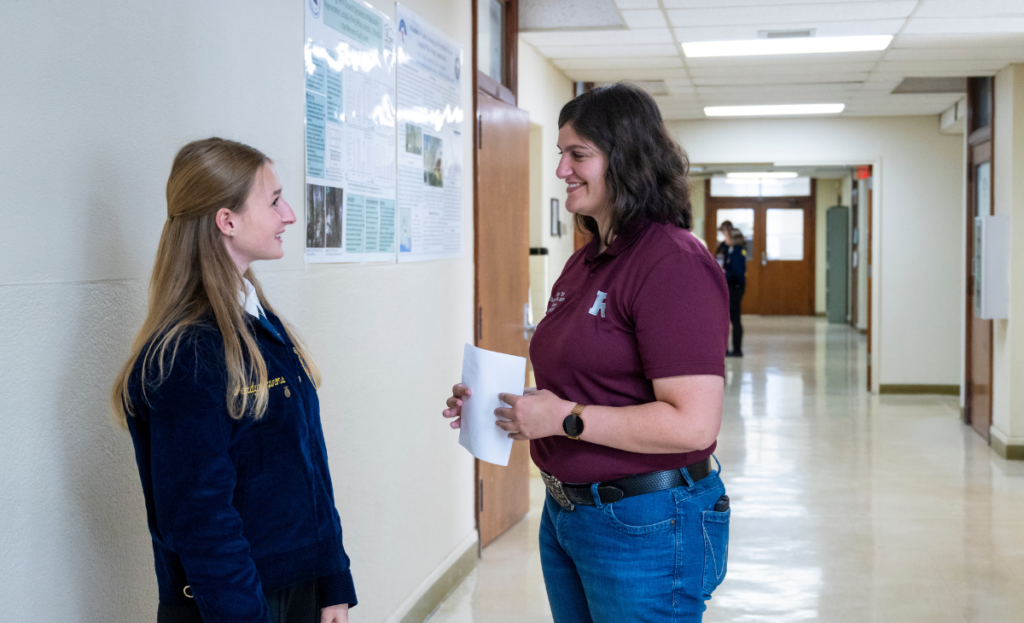
“I was a shy individual before being involved in ag classes, but my ag teacher saw something in me and brought me out of my comfort zone,” LeBlanc said. “Through her guidance, I went on to compete at the FFA National Convention for a speaking contest. I knew I always wanted to go into an ag related career, and her influence helped me realize that ag education was the right path for me.”
Agriculture is known to be a male-dominated profession, but Louisiana Tech is steadily changing that stereotype. Agriculture education is just one of the majors more women are choosing as their career path, and its popularity continues to grow each year.
Track Kavanaugh, agricultural education faculty advisor, has watched that shift unfold each year as more women enter the program and step confidently into leadership.
“The world would be a mess without women in agriculture,” he said. “They step in where others can’t, won’t, or don’t, doing the work that keeps the world turning. The women in ag education are absolutely essential, holding this profession together with unmatched grit and grace.”
For Triche, agricultural education is not just a profession. She grew up in South Louisiana surrounded by an agricultural legacy.
“My background in agriculture is deeply rooted in tradition,” Triche, student teacher at Ruston High School, said. “My grandfather grew up working on a sugar cane plantation and found his passion through the FFA. My dad found joy and fulfillment in his high school ag classes, which eventually led him to become an ag teacher himself.”
That legacy shaped Triche’s childhood in lasting ways, from tagging along to livestock shows to proudly wearing a hand-me-down blue corduroy FFA jacket.
“When I started reading the FFA manual for fun and asked my dad how to say ‘oral reasons’ when I was seven, it became clear this wasn’t just a hobby – it was a calling,” she added.
That sense of purpose extends beyond one classroom.
Cadie Coleman, a Louisiana Tech alumna, now teaches agriscience and serves as one of the FFA advisors at Ruston High School, completing the same path that Triche is just beginning.
“I was inspired to enter this profession by my ag teachers in high school,” Coleman said. “However, it became real for me when our school got a female ag teacher, and I could finally see how a woman could fit in this job and be successful.”
Coleman chose Louisiana Tech in 2018 in search of a personal, rigorous education, and she found that environment immediately.
“The experiences I had on South Campus were invaluable,” she added. “I truly felt prepared on my first day of teaching because of my time at Tech and student teaching at Ruston High.”
Coleman and many other women stand as proof of the profession’s evolution.
“Ag education has historically been male dominated, but that isn’t the case anymore,” she said. “There is a place for women in this profession, and it is a very influential one.”
The shift is not only visible in classroom – it is measured in numbers across the state.
In Louisiana, 46.6% of ag teachers are female. This year, only one of the nine agriculture education student teachers statewide is male. This growth in the profession also reflects student participation.
“With the continuing evolution and growth of the agricultural industry, a more and more diverse workforce is needed,” said Cade LeJeune, executive director of Agricultural Education and Louisiana State FFA advisor. “Women have become leaders in the industry, and this is reflected in the growing number of female ag teachers. As more women lead agriscience classrooms, we expect the number of female ag education students to continue growing.”
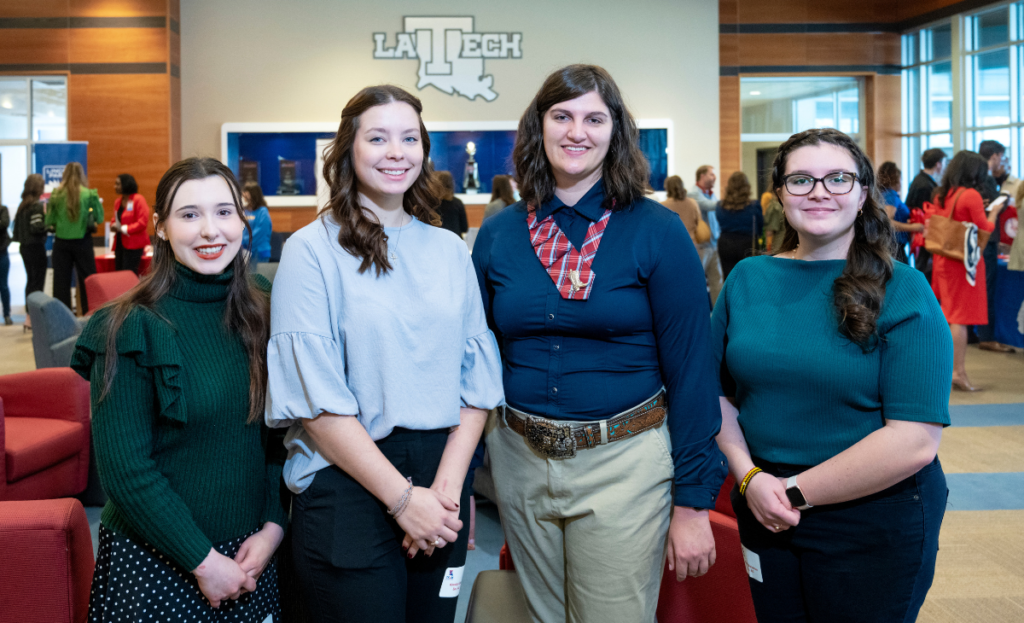
Inside a Ruston High classroom, Triche watches her students work through lesson plans and learn skills that will shape their futures, hoping to give them the same passion for agriculture she has. For her, the path was never accidental – it was inherited, intentional, and earned.
“This classroom is where I belong,” she said. “Why let the fun stop when I could be paid to do it? With ag education, I get to create opportunities and lifelong memories for my students the same way my teachers did for me.”